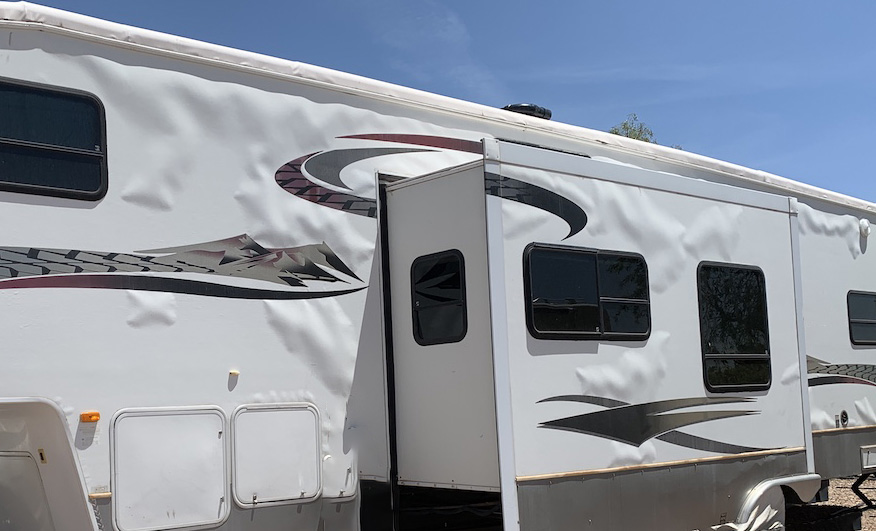
The sunlight trick is a visual inspection technique used to identify RV delamination—where the exterior fiberglass skin separates from its internal substrate—by using low-angle light to reveal surface imperfections that are invisible in flat light.
How the Sunlight Trick Works
Time of Day: Inspect the RV during the early morning or late afternoon when the sun is low in the sky.
The Shadow Effect: When the sun is at a low angle, any “bubble,” “ripple,” or “wave” in the fiberglass will cast a small shadow on the wall.
Viewing Angle: Stand at one corner of the RV and look down the side of the wall at a sharp angle (roughly 10 to 30 degrees). This perspective compresses the view of the wall, making even slight bulges stand out as dark shadows or distorted reflections.
Heat Expansion: Direct sunlight also heats the RV’s surface. If moisture is trapped behind the fiberglass, the heat can cause the water to turn into vapor or cause the materials to expand, often making the delamination bubbles physically larger and easier to see than when the RV is in the shade.
Confirming Your Findings
If the sunlight trick reveals suspicious shadows or waves, use these steps to confirm delamination:
The Press Test: Gently push on the area with your hand; a healthy wall should be solid, but a delaminated one will feel spongy or have “give”.
The tap test (also known as a “coin tap” test) is a diagnostic method used to identify areas where the internal layers of an RV wall have separated, even if they aren’t visibly bubbling yet.
How to Perform the Coin Tap Test
- Select Your Tool: Use a hard object like a large coin (quarter), a washer, the butt of a screwdriver, or a specialized composite tap hammer.
- Establish a Baseline: Start by tapping an area you know is solid and dry—usually in the middle of a wall away from any windows or seams.
Tap in a Grid Pattern: Move across the suspected area in a steady grid. Listen closely for changes in the sound:
- Solid Bond: Produces a sharp, clear “ping” or ringing sound
- Delaminated: Produces a dull, hollow “thud” or “clunk”
- Confirm with Pressure: If you hear a “thud,” gently press the area with your thumb. If it feels spongy or has “give,” you have confirmed delamination.
High-Risk Areas to Check
Focus your tapping around these common leak points:
- Seams: Roof-to-sidewall joints and corner moldings.
- Penetrations: Around windows, entry doors, and storage bay doors.
- Fixtures: Near exterior lights, city water inlets, and appliance vents.